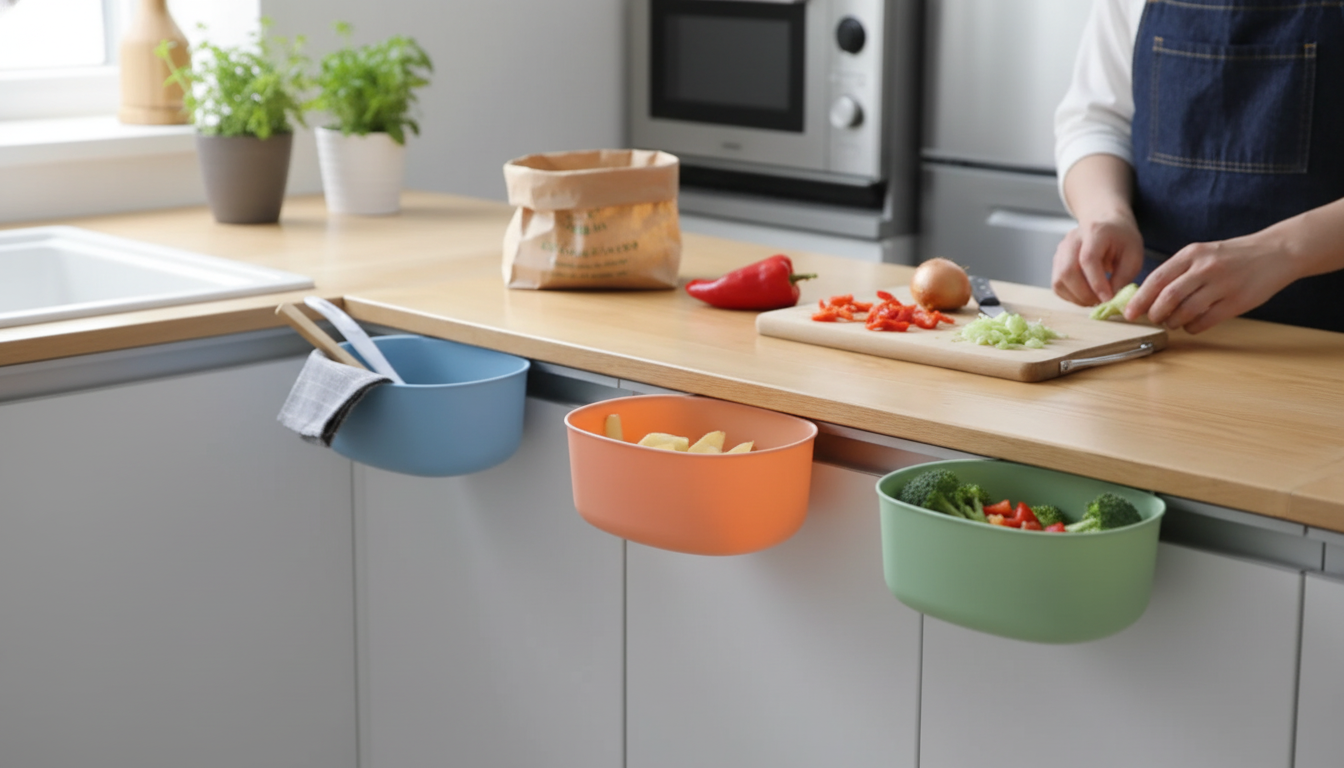
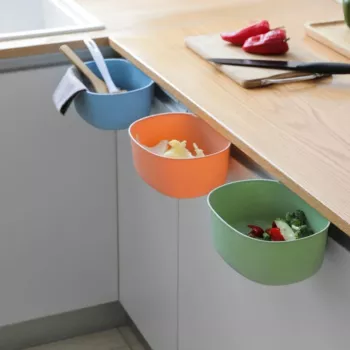
A hanging kitchen waste bin keeps peels, wrappers, and food scraps off the countertop and closer to where prep happens. By using unused vertical space—like a cabinet door or drawer front—this space-saving plastic trash container helps streamline cooking, reduce mess, and make small kitchens feel less cluttered.
Most kitchen mess happens in short bursts: trimming vegetables, opening packages, draining a can, or peeling fruit. A hanging bin puts the “toss point” right next to the cutting board so scraps don’t linger on the counter or end up in the sink.
If composting is part of the routine (even casually), a small, accessible bin can make it easier to separate food scraps without thinking twice. For guidance on what can be composted at home, the United States Environmental Protection Agency (EPA) composting resources are a helpful reference.
The best location is the one that matches how meals are actually made in the space. Think about where the cutting board lives, where produce gets rinsed, and which cabinet you open most often during prep.
For a simple, budget-friendly option, the Hanging Kitchen Waste Bin – Space-Saving Plastic Trash Container is designed to keep everyday prep scraps close at hand without taking up counter space.
Not all hanging bins feel stable in daily use. The most satisfying setups are the ones that don’t wobble, don’t snag the cabinet door, and are easy to rinse after a messy prep session.
| Option | Best for | Main drawback | Space impact |
|---|---|---|---|
| Hanging kitchen waste bin | Prep-time scraps right where food is cut | Needs a suitable door/drawer and stable fit | Frees counters and floor area |
| Countertop scrap bowl | Short prep sessions and quick dumping | Takes counter space; can look messy | Uses counter footprint |
| Floor-standing kitchen bin | Whole-kitchen waste and larger volume | Consumes floor space; more steps during prep | Uses floor footprint |
A small bin near food prep needs simple habits to stay pleasant. The goal is to prevent sticky buildup and keep moisture from sitting too long—especially if the bin is used for produce trimmings or leftovers.
Basic sanitation steps—like washing hands after handling food waste and regularly cleaning surfaces—help keep prep areas safer. The USDA Food Safety and Inspection Service cleanliness guidance offers practical reminders that fit easily into everyday routines.
For an easy upgrade that keeps prep flowing, consider adding the Hanging Kitchen Waste Bin – Space-Saving Plastic Trash Container near the cutting board area, then keep liners and a spare sponge in the same cabinet for quick maintenance.
Fit depends on door thickness, clearance, and hinge style. Check that the door can close smoothly with the bin in place and that it won’t bump shelves, frames, or nearby hardware.
Yes, with a liner and regular emptying to prevent pooling. Place it where any occasional drip won’t contact food items, and rinse more often if you’re tossing very wet scraps.
A quick rinse or wipe as needed keeps residue from building up, with a deeper wash weekly or sooner for wet scraps. Let it fully dry before rehanging to help reduce odors.










Leave a comment