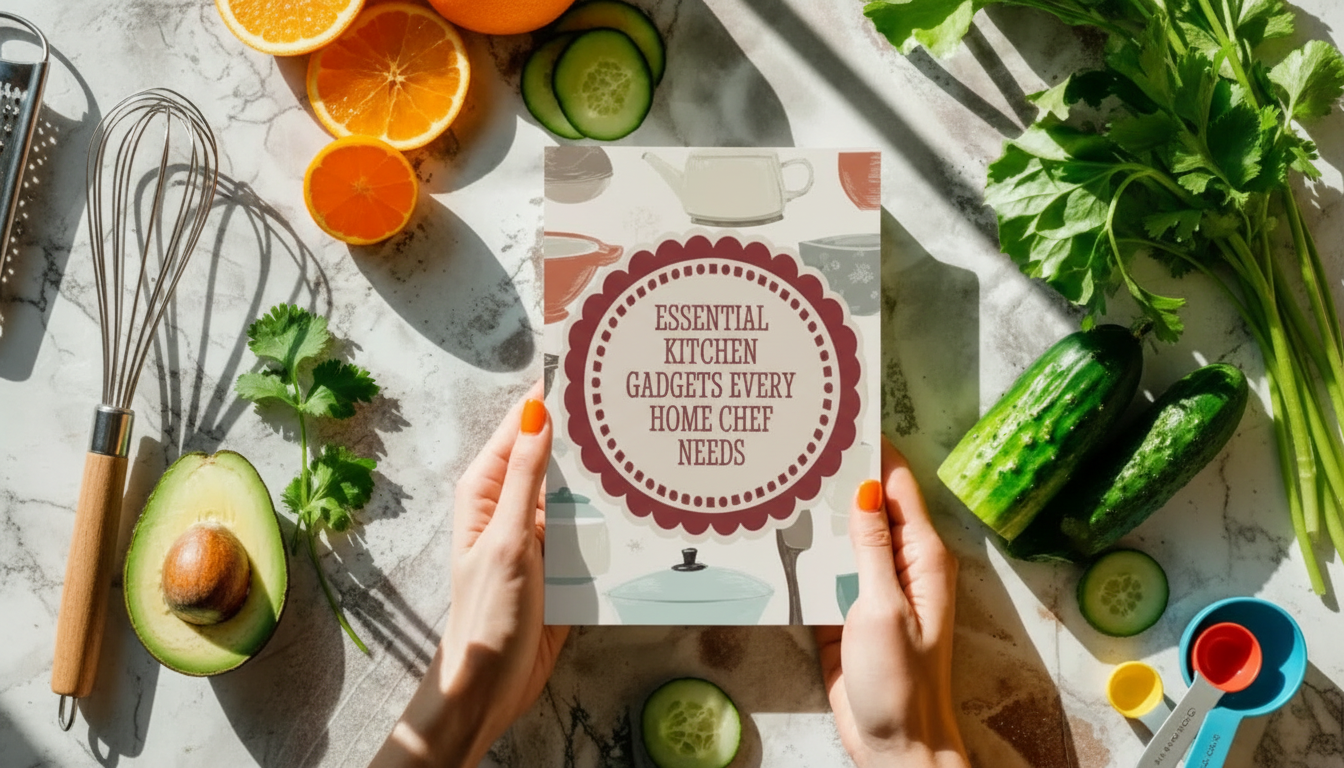
A well-chosen set of kitchen gadgets makes everyday cooking faster, safer, and more consistent—especially when meal prep is part of the routine. Use the checklist to take stock of what’s already in the kitchen, spot gaps, and build a practical setup without duplicates or impulse buys. The goal isn’t a drawer full of gadgets; it’s a small, reliable set you can reach for automatically, day after day.
Before buying anything, think in terms of repeat tasks: measuring, chopping, mixing, heating, storing, and cleaning. Gadgets that make these steps smoother pull their weight in almost every recipe, whether you cook American comfort food, stir-fries, soups, or sheet-pan dinners.
Tip: If a tool regularly causes frustration (a flimsy tong, dull peeler, warped cutting board), that’s usually the smartest upgrade to make first.
Consistency is what separates “good enough” from “I can repeat this next week.” A few measuring tools help with baking accuracy, meal prep portions, and food safety.
| Task | Gadget | Why it matters | Meal-prep tip |
|---|---|---|---|
| Portioning | Digital kitchen scale | More consistent servings and recipes | Weigh proteins before cooking for uniform containers |
| Food safety | Instant-read thermometer | Avoids under/overcooking | Check batch-cooked chicken at the thickest piece |
| Speed | Kitchen shears | Cuts herbs, trims meat, snips parchment | Keep a pair reserved for food-only use |
| Organization | Labels/marker | Reduces waste and confusion | Label date + contents on every container |
Fast prep is rarely about a fancy device—it’s about sharp, comfortable tools that make the same motions easier. Build around a small core that can handle 90% of what you cook.
These are the gadgets that keep the stovetop running smoothly: stirring without scratching, flipping without splashing, and mixing without wasting ingredients.
Little annoyances add up: stuck food, slippery mitts, gritty sauces, or bland seasoning. A few basics prevent those “why is this so hard?” moments.
For extra safety, it’s also worth knowing your cold storage is doing its job; the FDA has helpful guidance on temperature monitoring at FDA — Refrigerator Thermometers and Food Safety.
If you want a simple, ready-to-print version, see Essential Kitchen Gadgets Every Home Chef Needs | Printable Checklist | Digital Download for Cooking & Meal Prep.
To round out a welcoming kitchen setup beyond tools, consider simple, functional décor pieces like an Embroidered Tassel Cotton Linen Tablecloth for Dining & Home Decor or a Rectangular Wooden Wall Hanging Shelf for Plants and Home Décor to keep essentials within reach and the space feeling finished.
Start with tools that improve daily consistency and safety: a digital kitchen scale, an instant-read thermometer, a sharp peeler, a microplane, sturdy tongs, a silicone spatula, and a fine-mesh strainer. These cover measuring, prep, cooking control, and quick flavor-building across most recipes.
A practical rule of thumb is 5–10 containers per person for lunches and dinners, depending on how many meals you prep ahead. Add a few small leak-resistant containers for sauces, dressings, chopped toppings, and snacks.
A good checklist is organized by clear categories (prep, cook, bake, store), with space for notes and priorities. It should make it easy to mark “owned,” “need,” and “upgrade” so shopping stays focused.










Leave a comment